
Davidson County Criminal Docket Searches
Begin with the North Carolina Judicial Branch eCourts Portal. Davidson joined eCourts on October 13, 2025. One search now covers the whole state rather than a county vendor site. In Smart Search, type a case number or name. Then narrow the location to Davidson and pick Criminal Actions when statewide results run wide. A full case number works best. Party names work too, though the advanced name filter is tight and allows no wildcards. The Portal's live docket view is called a Case Summary, or Register of Actions. It is a public case view, not the official court record. File & Serve serves eCourts filers, not public searchers. If a result comes back empty, a paper-era filing may need review. A certified copy may be required instead. So ask the Davidson Clerk rather than reading an empty result as proof no case exists.
- Open Portal Smart Search and enter the complete case number when it is available, or a carefully formatted party name.
- Expand the filters as needed, set the location to Davidson, and choose Criminal Actions to limit statewide returns.
- Open the matching public Case Summary and compare its case information, parties, assignment, events, and dispositions.
- Use Search Hearings separately for the current location and time of a setting.
- Contact the Clerk for a paper file, public-terminal search, or certified copy when Portal does not supply the needed record.
Note: A status result and a hearing date answer different questions, so check both the Case Summary and Search Hearings.
Davidson Criminal Portal Fields
Smart Search starts with one choice: case number or party name. Enterprise Justice numbers follow a pattern. It uses two year digits, case-type letters, a six-digit sequence, and a three-digit county identifier. The pattern helps you recognize a real number. Do not invent a Davidson example. Advanced filters cover location, party details, case status, case type, and a filing-date range. Search Hearings is the separate current-calendar tool. It accepts case, party, business, attorney, judicial-officer, courtroom, county, and date criteria.
| Portal field | Davidson criminal use | Important limit |
|---|---|---|
| Case Number or Party Name | Base Smart Search for a known case. | One base search is required. |
| Location | Select Davidson to reduce statewide results. | It is an optional filter. |
| Case Category | Select Criminal Actions for criminal results. | Use with, not instead of, the base search. |
| Search Hearings | Check current hearing time and place. | It is separate from the case timeline. |
Official Portal training resources explain the public search features and their limits.
Criminal Dockets: What They Show
A public Davidson criminal Case Summary may include the case identifier, assignment details, parties, a chronological Case Events list, dispositions, hearings, and financial information where it applies. Not every case fills every block. Document images, charge detail, or financial items may be absent. The events list is the heart of the docket. Criminal process events can show a summons issued, served or unserved, reset to unserved, or recalled. Always read a dated event beside its related hearing, order, or disposition. Never read it on its own.
| Case identifier | YY + type letters + six-digit sequence + county identifier, shown as Portal case information. |
|---|---|
| Assignment and parties | Court context and the State/prosecuting side, defendant side, and attorney information when recorded. |
| Case Events | The Register of Actions chronology for filing, process, service, motions, resets, and other docketable events. |
| Hearings | Displayed when available; use Search Hearings for a separate current-setting check. |
| Disposition and financials | Shown when applicable, but a Portal entry does not replace a signed order or certified Clerk record. |
The Portal Advanced User Guide supplies the official Case Summary field inventory.
Davidson Criminal Event Terms
Portal labels help you search. They are not the order that gives an outcome legal effect. Pending means the displayed case has no listed final disposition. Appealed, Reopened, Trial De Novo, and Transferred to Superior Court all signal procedural movement that deserves a closer read. The disposition and its linked events supply the context. The Clerk of Superior Court publishes no official Davidson docket-code key. Confirm unfamiliar abbreviations with that office rather than guessing from a short label.
- Case Event
- A dated entry in the Case Summary chronology.
- Disposition
- A recorded result or status that should be read with its order or related event.
- Trial De Novo
- A new Superior Court trial after a District Court criminal appeal, not ordinary appellate review.
- Continuance or reset
- A delay or changed setting that requires a fresh hearing check.
These labels explain the public record. They do not by themselves establish a certified conviction, dismissal, or sentence.
Criminal Case Stages on the Docket
A Davidson criminal Case Summary usually unfolds as a chain of public events, not one final line. Early charging activity may give way to arraignment or plea events, pretrial settings, motions and orders, a trial or plea result, disposition, and financial entries. A case can also show a continuance, reset, transfer, or appeal. Changes like these are normal in a criminal docket. Still, check the current hearing on its own. A chronological event may describe a date that has already passed.
Docket flow: Process or charge event › arraignment or pretrial activity › hearing check › plea or trial › disposition.
The Judicial Branch's criminal-cases explanation lays out the state court path the Davidson criminal docket reflects.
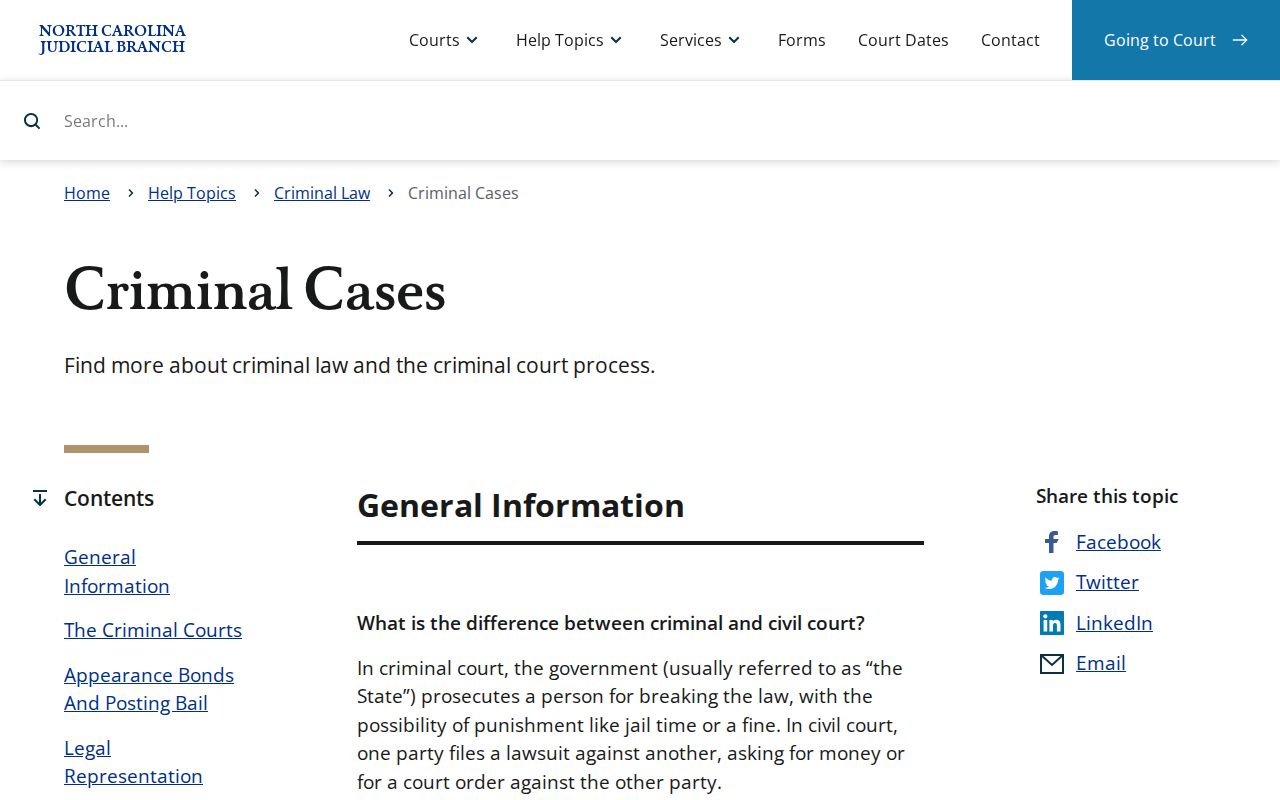
That routing explains why a Davidson case can show early District Court activity before a felony reaches Superior Court.
Davidson Criminal Court Path
Davidson runs one Clerk of Superior Court records system, but assignment still matters. District Court handles most misdemeanors and infractions. Felonies may start there for preliminary activity or qualifying pleas. Felony trials and serious resolutions happen in Superior Court. Magistrates sit as District Court officers with limited preliminary and waiver functions. A District Court criminal appeal triggers a new trial in Superior Court. From Superior Court, appeals go to the North Carolina Court of Appeals. That is the state's intermediate appellate court.
| Davidson court level | Criminal docket context | Record custodian |
|---|---|---|
| Superior Court | Felony trials, serious felony resolutions, and new trials after District Court appeals. | Davidson Clerk of Superior Court. |
| District Court | Most misdemeanors, infractions, and preliminary felony activity. | Same Davidson Clerk. |
| Magistrates | Limited preliminary criminal and waiver roles. | Part of the District Court system. |
Inside the Portal, Assignment Information and Case Events show the actual path a case took.
Davidson County Criminal Docket Courts
The court split does not create separate clerks or a city-court docket. The Davidson Clerk keeps consolidated Superior and District Court records. A misdemeanor or infraction usually stays in District Court. A felony trial belongs to Superior Court even if its docket history includes earlier District Court proceedings. For any one case, trust the Portal assignment and event history. Do not rely on where the incident occurred or the city in an address. The Clerk's official Davidson directory listing names the county court offices. They stand behind this unified records route.
Need a phone number or room for a Davidson criminal case? The directory covers that. For a statewide public search of a criminal case, Portal is the entry point.
Davidson Criminal Hearing Checks
A Pending label is not a hearing date. Begin with Search Hearings. Then check its result against the Hearings section. Also check the newest Case Event in the Case Summary. The Davidson Criminal Calendars show published sessions. Still, a reset, continuance, or last-minute court action can undo any calendar. If the notice, Portal record, and calendar disagree, call the Clerk. You can also call the court office to confirm which date controls.
Current-setting check: Use Search Hearings for time and location, then compare the result to the case’s event history before relying on a scheduled date.
A published date and a hearing record answer different questions. After a change or cancellation, the court itself is the reliable source.
Access Rules for Criminal Dockets
North Carolina starts from openness. Clerk-maintained files, dockets, and indexes are open for public inspection during regular office hours. That holds unless a law says otherwise. So the Portal is a convenience, not the legal measure of access. Sealed, confidential, or sensitive material stays hidden from ordinary Portal users. State law keeps juvenile records confidential. A basic Portal account does not unlock them. And standing at a courthouse terminal changes nothing. A sealing order or statutory limit still controls the physical file.
Key Rules:
G.S. 7A-109 requires the Clerk to keep docket records and provides the public-inspection baseline unless access is barred.
G.S. 15A-151 strictly limits disclosure of expunction records.
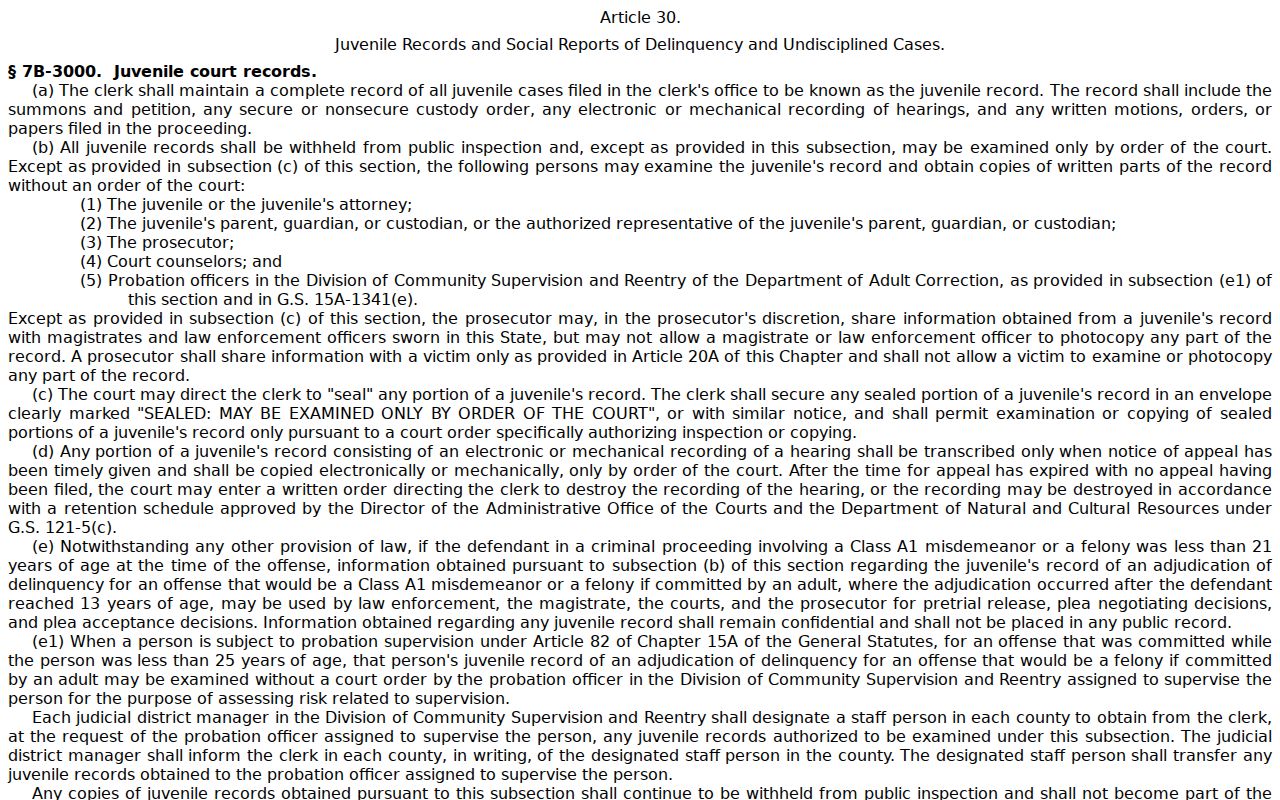
G.S. 7B-3000 withholds juvenile records from ordinary public inspection except for authorized access or court order.
The Judicial Branch's expunction information makes the scope plain. An expunction is a court process that alters qualifying state records, not a result the public simply stops seeing.
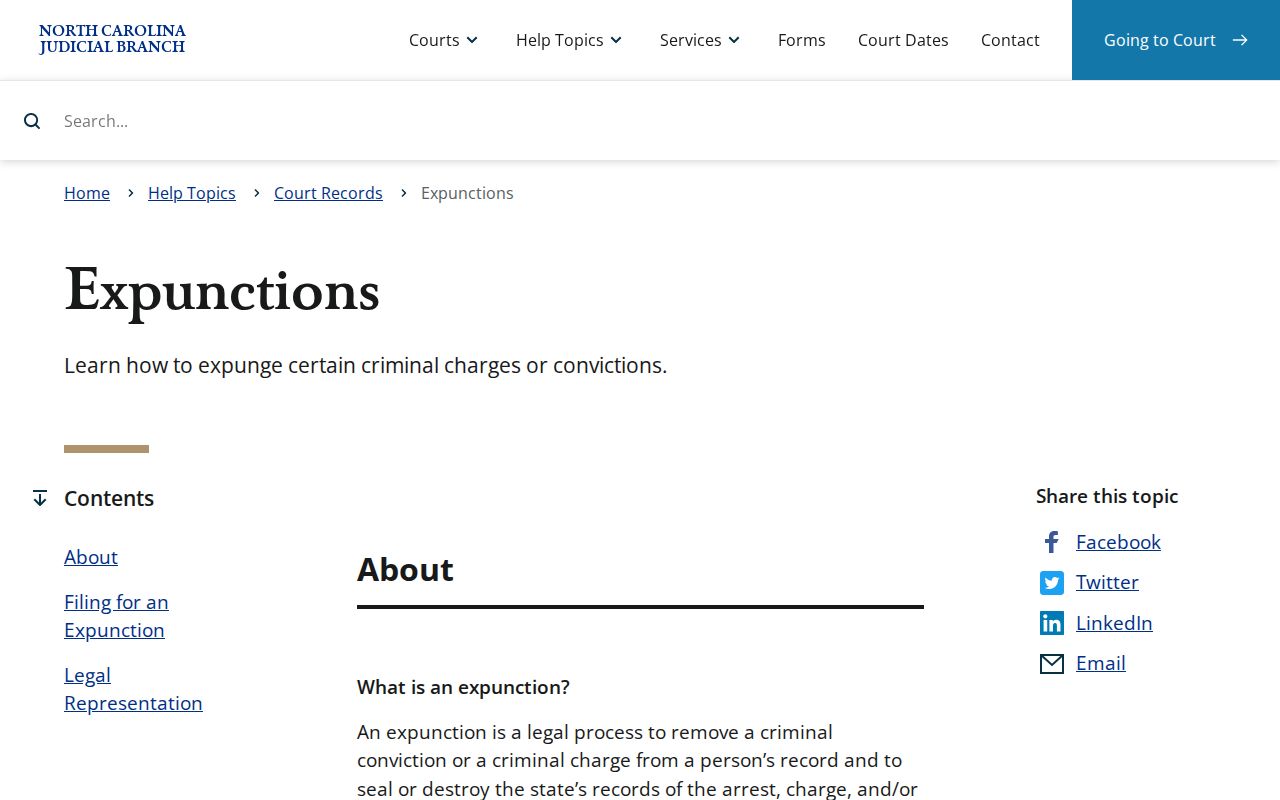
For a Davidson case, the Clerk handles filing mechanics and any leftover court-system record question. Eligibility is a legal-advice question. The official text of G.S. 15A-151 states the confidentiality rule that follows an expunction.
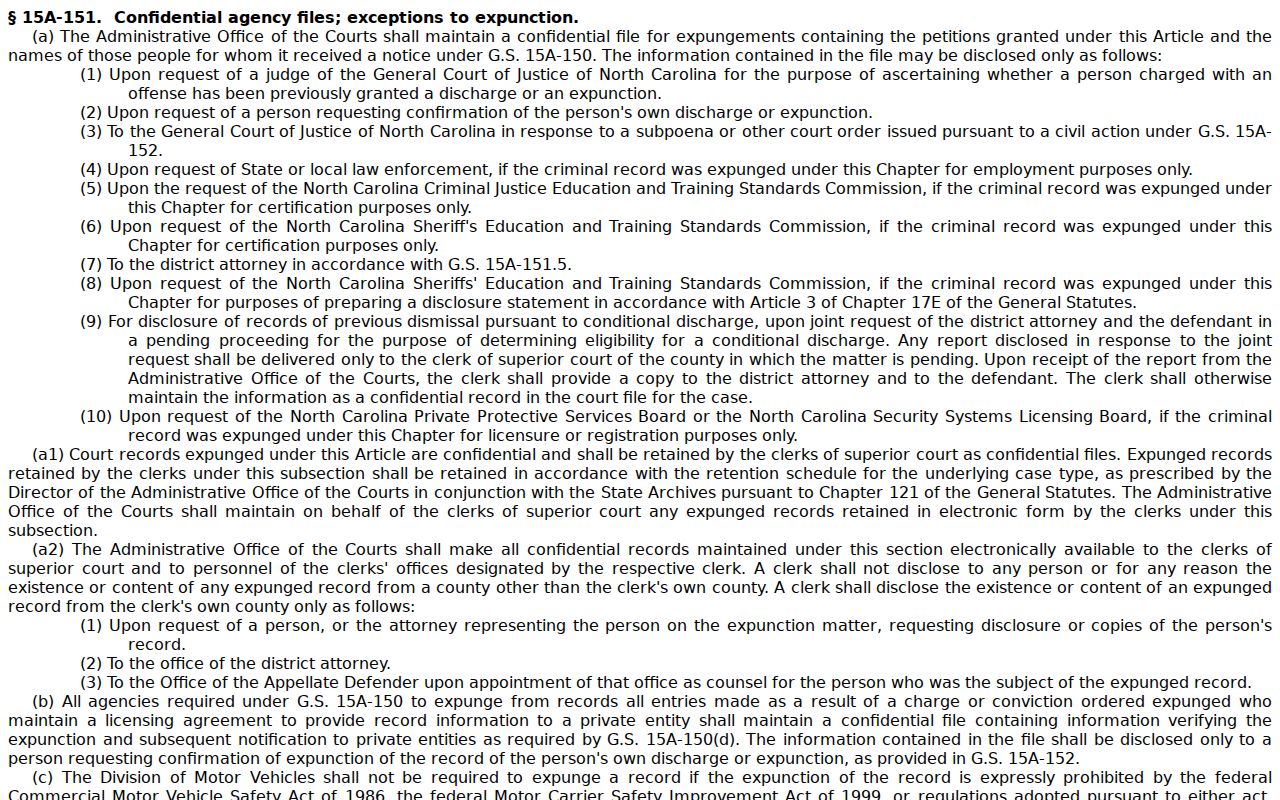
So an expunged case that no longer appears should never be read through a public docket search. The juvenile-record rule sits in G.S. 7B-3000.
A restricted result reflects an access rule, not an error you can work around.
Davidson Criminal Clerk Records
For a paper file, a public-terminal lookup, or a certified docket, order, or judgment, go to the Davidson Clerk of Superior Court. Portal is not an official record. The NCAOC does not certify Davidson case documents either. The active Davidson courthouse and the contact directory give the local route. It covers Superior and District criminal records alike. A Thomasville Branch appears as another judicial location. But the Davidson Clerk still keeps the records.
Davidson Clerk of Superior Court
110 W. Center Street
Lexington, NC 27292
(336) 242-6701
Regular weekdays, 8:30 a.m. to 5 p.m.
Thomasville Branch
22 Randolph Street
Thomasville, NC 27360
(336) 474-3185
Regular weekdays, 8:30 a.m. to 5 p.m.
Some Judicial Branch records belong to NCAOC itself. Its public-record request route is the right channel for those. That online or mail option never replaces the Clerk's Davidson case-file process. Call ahead when you need a historic paper file or a certified copy. Remember, a docket entry is not a certified record.